Basement Drywall Finishing in Metro Detroit: Moisture, Code, and a Clean Finish
Finished basements add living space across Wayne, Oakland, and Macomb counties — but Michigan humidity and concrete walls demand the right board, insulation, and finishing sequence.
A finished basement is one of the smartest square-footage upgrades you can make in Metro Detroit. Whether you are building a family room in Sterling Heights, a home office in Royal Oak, or extra bedrooms in Livonia, drywall is what turns raw framing into a space that feels like the rest of the house. At BH Drywall Metro Detroit, we finish basements every week — and the difference between a project that stays flat for years and one that develops mold lines or cracked corners almost always comes down to prep, product choice, and sequencing.
Basements are not just another floor. Concrete foundations breathe, seasonal groundwater shifts, and Michigan winters drive humidity swings that upstairs walls never see. Before the first sheet goes up, we walk the job with homeowners and discuss how the space will be used, where heat runs, and whether a bathroom or wet bar is part of the plan. Those answers dictate fire taping, moisture-resistant board zones, and how aggressively we need to control vapor at the foundation.
Start with framing and insulation — not drywall
Drywall only performs as well as what is behind it. In most Metro Detroit basements we see either steel stud or wood framing on standoffs from the foundation wall, with rigid or batt insulation in the cavity. Gaps at the sill plate, rim joist, and any plumbing chases must be sealed before board. Cold spots that are not addressed will show up later as ghosting or condensation stains on the finished surface. How framing and drywall fit together, including backing layout and soffit planning, is covered in its own guide.
We also verify ceiling height against local code and egress requirements if bedrooms are involved. Low soffits around ducts are common; we plan drywall breaks so joints land on backing and future cracks are minimized. Homeowners in Warren, Troy, and Dearborn often underestimate how much layout work happens before mud touches the wall.
Moisture-resistant board where it matters
Not every basement wall needs green board, but any surface near a shower, laundry, or bar sink should be moisture-resistant gypsum. We still insist on proper waterproofing behind tile in wet areas — board alone is not a tank. For general living walls, standard drywall paired with a continuous vapor strategy and dehumidification is usually appropriate when the exterior drainage and foundation are in reasonable shape.
If you have had seepage or active leaks, drywall is the last step, not the first. We will tell you plainly to fix water entry before we hang a single panel. Covering a problem only delays bigger repair bills.
Hanging strategy for below-grade walls
Basement ceilings are often a mix of main beams, soffits, and recessed can lights. We stagger joints, use the right screw spacing, and keep edge distances consistent so tape has a fair chance to hide movement. Long walls without control joints can telegraph cracks when the house settles; we discuss where reasonable breaks belong so you are not surprised a year later.
Around windows and bulkheads, we build out square and true even when the concrete is not. That extra time at hang is what makes trim and paint look intentional instead of wavy.
Finishing levels and paint readiness
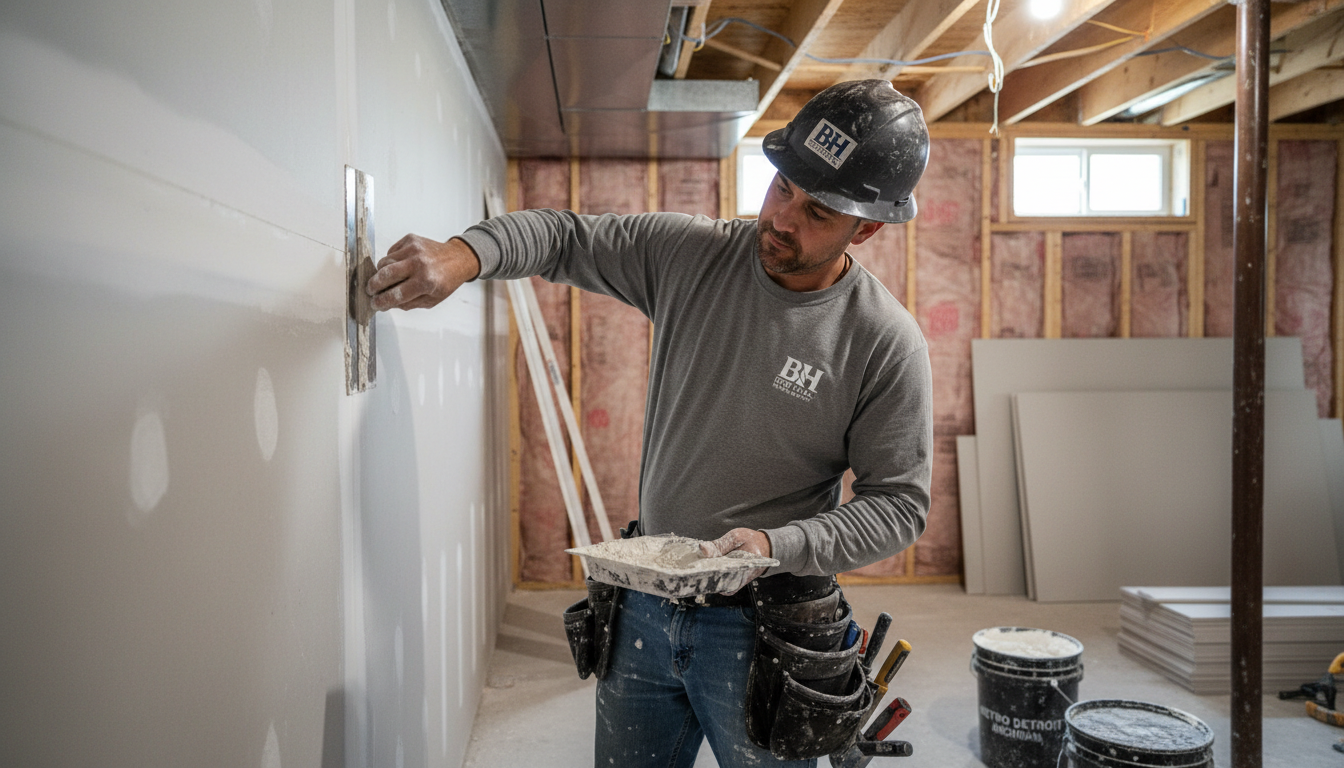
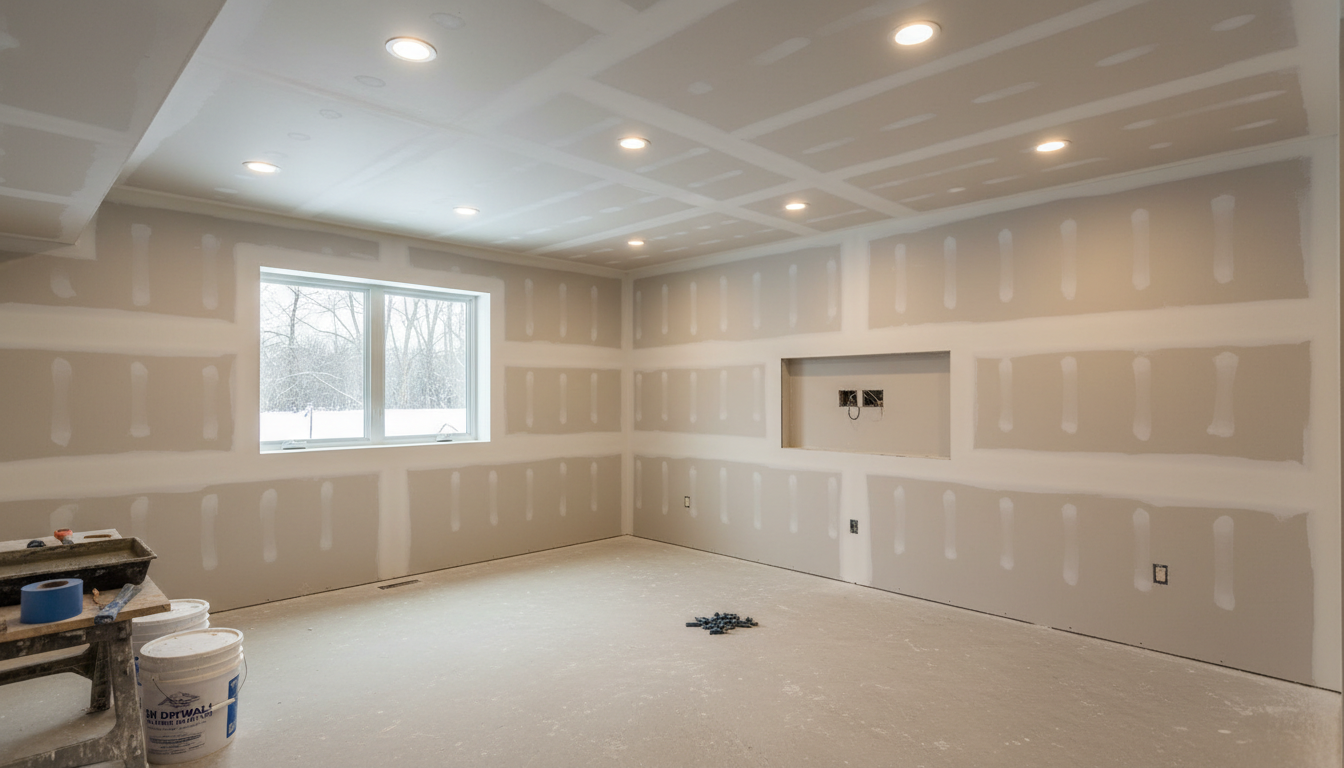
Most living-space basements in Michigan homes call for a Level 4 finish at minimum — embedded tape, two coats of compound, sanding ready for flat or eggshell paint. If you are planning glossy paint, strong raking light, or a media wall with side lighting, ask about Level 5 skim options. We explain the tradeoff in cost versus how perfect the wall reads under LED strips or large-screen glare.
Corners receive metal or paper-faced bead depending on traffic and abuse tolerance. Kids, hockey bags, and furniture moves punish outside corners; we beef those up where it makes sense.
Mechanical, electrical, and inspections
Basement projects frequently trigger permit and inspection paths depending on municipality — Detroit, Ferndale, Clinton Township, and others each have their own timelines. We coordinate hang and finish around rough inspections so you are not tearing off completed work. Fireblocking at soffits and around stair enclosures must be correct before close-in.
Working with BH Drywall Metro Detroit
Our crews serve homeowners across Metro Detroit MI with hang, tape, texture match, and repair. We give clear scopes: hang only, hang and finish, or full turn-key ready for primer. You get straight answers about timeline, dust control, and what you should handle before we arrive — insulation, framing inspection, HVAC final placement.
Ready to turn unused basement footage into usable rooms? Call BH Drywall Metro Detroit at (313) 236-4558. We will schedule a walkthrough, confirm board types and finish level, and build a schedule that respects Michigan weather and your move-in goals.
Need a drywall contractor in Metro Detroit?
Sunday through Thursday 9am to 5pm and Friday until noon, Wayne, Oakland & Macomb counties. Tap a button and a tech is on the way.