Water Damage and Flood Cuts: Drywall Steps After Michigan Basements and Burst Pipes
After leaks and floods, how high do you cut drywall? BH Drywall Metro Detroit explains drying, mold prevention, and rebuild sequencing for Metro Detroit properties.
Water in your walls is an emergency for both structure and health. Burst pipes in January, sump failures in Roseville, ice dam seepage in Ann Arbor suburbs, and appliance leaks in upstairs baths — each scenario leaves drywall soaked to different heights. BH Drywall Metro Detroit works alongside restoration contractors and homeowners daily to remove compromised board, confirm dry framing, and rebuild to a paint-ready finish across Metro Detroit MI.
The first priority is stopping the source and documenting for insurance if you are filing a claim. Our role begins when it is time to remove wet gypsum safely and replace it so mold does not get a foothold behind new paint.
Why flood cuts exist
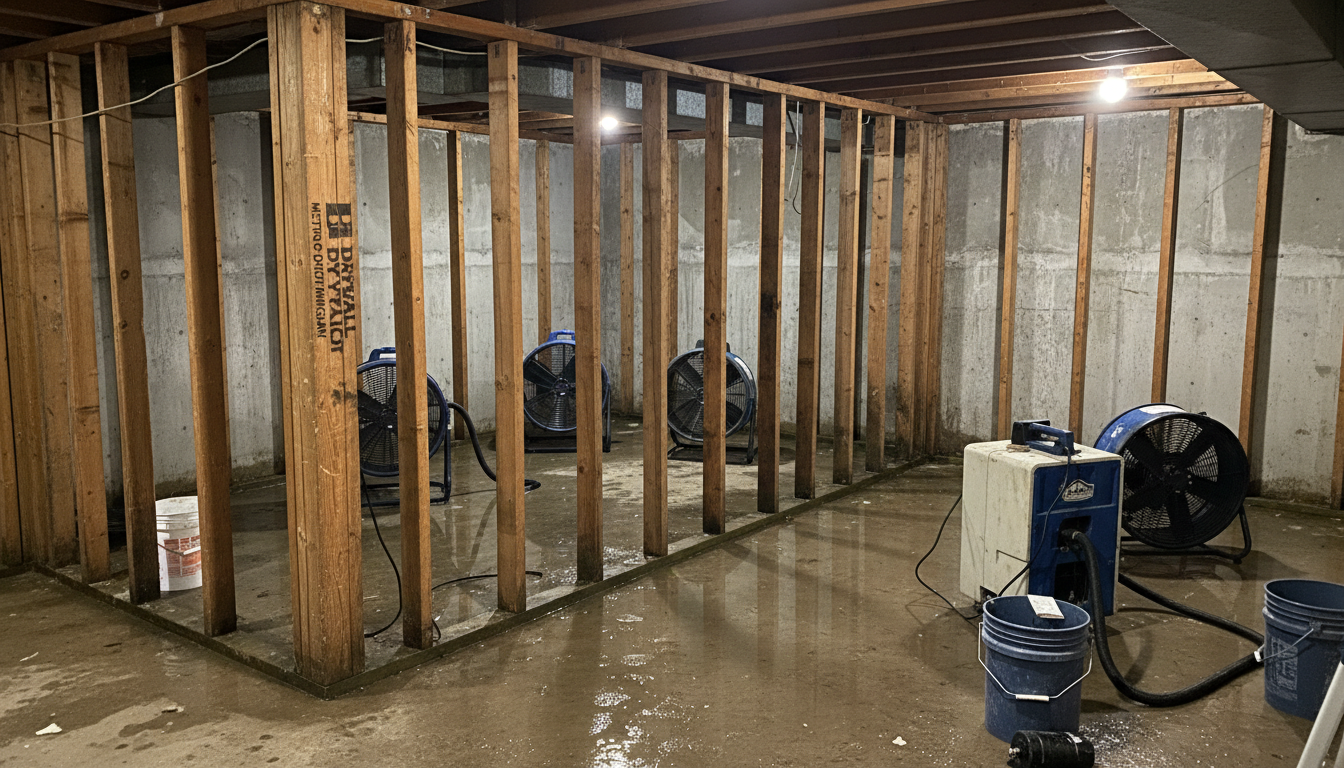
Gypsum core acts like a sponge. Once water wicks above the visible stain line, the paper face and core stay elevated in moisture long after floors look dry. Industry practice and restoration protocols often call for a flood cut — removing drywall 12 to 24 inches above the highest moisture reading or the documented water line — to expose the cavity for drying equipment and inspection.
In basements, cuts may run full height if saturation was total or if contamination (sewage or gray water) requires discard. Clean water on an upper floor might need only lower sections of wall removed if moisture meters on studs read dry within days.
Who measures moisture?
Restoration companies typically log readings; we respect their cut lines when sequencing rebuild. If you are owner-managed, we still meter before hang. Installing new board against damp framing traps liability and odor. Michigan basements need dehumidification and airflow until wood moisture is in acceptable range — rushing hang is false economy.
Safety and containment
Disturbed wet drywall can release spores if mold already started. Containment, HEPA filtration, and PPE belong on heavy jobs. We follow site safety plans when lead or asbestos surveys apply — older Detroit housing stock may require testing before aggressive demolition.
Electrical outlets in wet zones stay off until cleared. We coordinate with electricians to reset boxes and verify GFCI paths in kitchens, baths, and unfinished basement areas before close-in.
Rebuild sequencing after dry-out
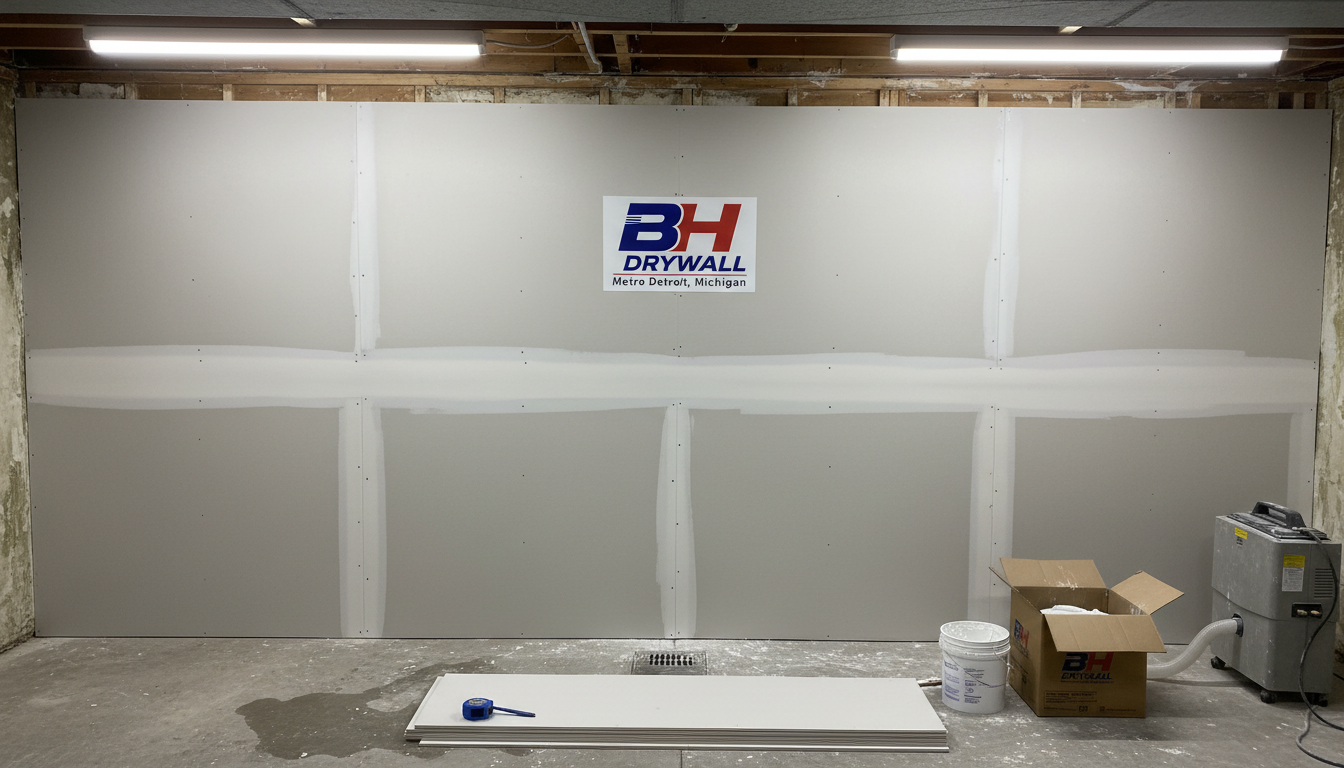
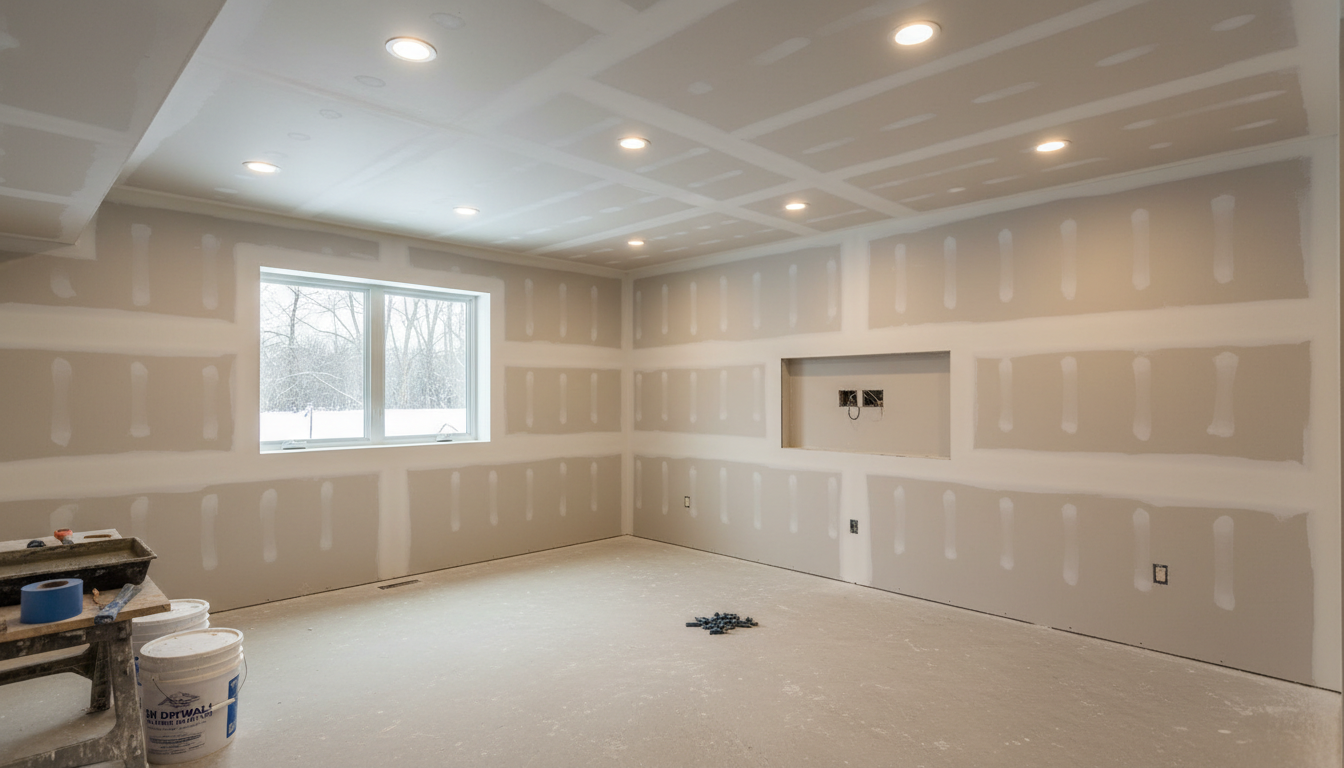
Once framing is dry and treated per restoration spec ( antimicrobial where required ), we hang replacement sheets, tape, and finish to match undamaged areas. Partial height replacements in living rooms need horizontal seams placed thoughtfully — sometimes we replace full sheets floor to ceiling on affected walls to avoid a visible “belt line” at 24 inches.
Insulation that sat wet must be replaced before drywall returns. Vapor barriers and sill areas in Metro Detroit basements are common failure points; we flag them even when scope is “drywall only.”
Texture, color, and insurance scopes
Insurance adjusters often authorize “like kind and quality” repair. We document finish level and texture type so supplements are accurate. Orange peel match on a flood-cut wall in Warren should include primer sealer on new work to prevent flashing against older painted surfaces.
If only one wall in an open plan was damaged, full-wall repaint on adjacent walls may still be necessary for color uniformity — we tell you that before final coat so you are not surprised at touch-up day.
Whole-home versus localized events
Whole-home pipe freezes can damage multiple levels. We phase work: main living areas first for occupancy, bedrooms next, garage and utility last. Commercial-style drying timelines still apply in houses — families need clear move-back dates.
Prevention conversations
After rebuild, we talk about door sweeps, hose bib shutoffs, water alarms, and maintaining sump pumps — not as alarmism, but because repeat events destroy twice the drywall. Proper board type in wet zones and keeping paint sealed at baseboards reduces wicking.
Call for damage assessment and rebuild
If you see swelling baseboards, soft drywall near tubs, or staining after a storm, do not wait for the smell to confirm mold risk. BH Drywall Metro Detroit responds to emergency cut-out and scheduled rebuild scopes with clear lines: demo, dry verification, hang, finish, texture.
Reach us at (313) 236-4558. We serve homeowners and property managers throughout Metro Detroit MI with water damage drywall removal and professional replacement that respects drying science, not just cosmetic cover-up.
Need a drywall contractor in Metro Detroit?
Sunday through Thursday 9am to 5pm and Friday until noon, Wayne, Oakland & Macomb counties. Tap a button and a tech is on the way.